Inside is a short game. That fact has always been part of its strength. The question in 2026 is whether it still feels worth a night when so many newer titles compete for the same limited evening. After replaying it recently under the same constraints most busy adults face—tired focus, finite time, and no appetite for filler—the answer remains clear: it is still brilliant, still tight, and still worth a night.
The game does not waste motion. Every sequence advances atmosphere, tension, or puzzle logic. There is no extended tutorial, no inventory management, and no systems that ask you to learn them before the experience begins. You start moving, the world responds, and the tone is already established. That density is rarer than it should be.
This piece looks at what holds up on a fresh playthrough, how the short length serves real-life schedules, why the atmosphere still lands, and how to decide whether tonight is the right night for it. Worth opening tonight is the only ranking that matters here.
The Strength of a Complete Short Experience
Inside can be finished in a single focused evening or split cleanly across two shorter sessions. That flexibility is rare. Most story-driven games of similar ambition ask for a larger continuous commitment. Inside does not. The total runtime sits in a range that matches the free time many adults actually have after work, family, or other obligations.
Pacing and Density
The game moves at a deliberate but never sluggish pace. Environmental storytelling carries most of the narrative weight. Puzzles are integrated into the movement and the world rather than presented as separate challenges. The result is a continuous feeling of progress even when you are solving something. Because the total length is contained, every sequence has to earn its place. That design pressure still shows. Nothing feels like padding added to justify a higher price or a longer runtime.
I noticed this most clearly on the recent replay. Sequences that once felt mysterious now feel precise. The game is not hiding length behind ambiguity. It is simply efficient. For a player who only has one or two hours, that efficiency is a form of respect.
How It Feels to Replay in 2026
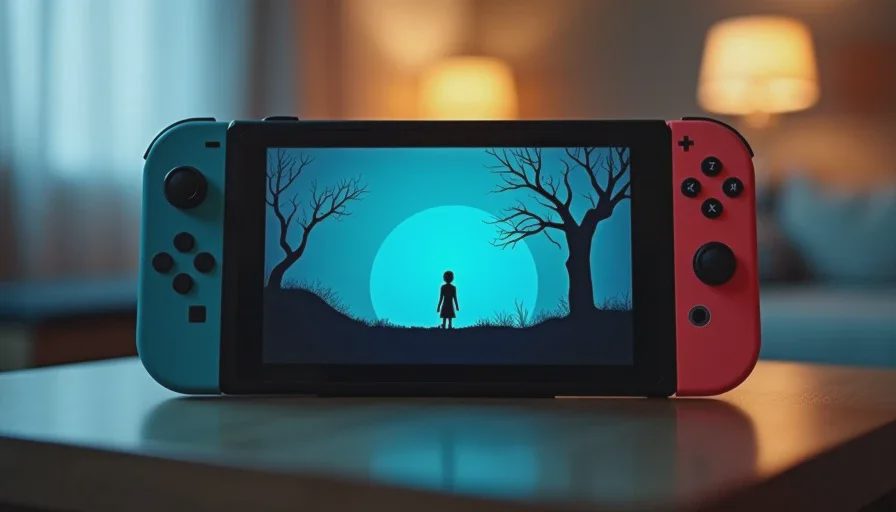
Knowing the broad shape of the story does not remove the tension. The atmosphere is carried by animation, sound design, and environmental detail more than by plot twists. Those elements have not dated in a way that breaks immersion. The muted palette, strong silhouettes, and careful use of light still read clearly on modern displays. Performance is stable. There is little friction between wanting to play and actually playing.
Controls and Presentation
The control scheme remains simple and responsive. Movement is weighty without feeling sluggish. Interactions are contextual and rarely require menu diving. For a returning player the experience is closer to revisiting a short, well-made film than to re-learning a complex game system. That quality makes it easy to recommend for a night when you want something complete and self-contained.
New players still get a readable first half-hour. The game teaches through doing. There is almost no text. The world itself provides the feedback. That approach continues to work for adults who arrive at the session with limited residual focus.
Practical Fit for Busy Adults
Several traits continue to serve limited free time well:
Total length matches a realistic evening
No complex systems to relearn
Clean pause and resume
High density of meaningful moments per minute
Minimal setup friction
These traits make the game feel designed for the way many people actually schedule their free time rather than for idealized uninterrupted blocks. This is a two-hour energy game, not a weekend ownership game. The distinction matters.
Player Situation | How Inside Responds | Practical Note |
|---|---|---|
One focused evening free | Can be finished in a single sitting | Ideal for a complete experience |
Two shorter nights available | Natural midpoint exists for splitting | Atmosphere carries across sessions |
Low tolerance for tutorials | Almost none required | Starts delivering immediately |
Want atmosphere over systems | Atmosphere is the primary delivery method | Tone is consistent and controlled |
Prefer to stop cleanly | Pause is reliable and low-friction | No long unskippable sequences |
The table is a quick reference for matching the game to the night you have. Personal energy level will refine the choice further.
When It Might Not Be the Right Choice
Inside is not a comfort game in the cozy sense. The tone is tense and often unsettling. If the evening calls for something restorative and low-stakes, this may be the wrong register. Good game, wrong night applies here as it does elsewhere. Recognizing that category keeps recommendations honest.
It also offers little in the way of mechanical mastery or replayable systems. Once the experience is complete, the primary reason to return is the atmosphere itself. That is enough for many players and insufficient for others. If you primarily enjoy games for their systems, loops, or long-term progression, Inside will feel thin on a second or third visit.
Another practical limitation is mood. The game asks for a certain level of attention. It is not background-friendly. If your residual energy is too fragmented, even a short dense experience can feel like more work than it is worth. In those cases the better move is often a lower-demand title or no game at all.
How to Decide Tonight
A simple set of questions helps:
Do I have enough focused attention for a tense, atmospheric experience?
Am I looking for a complete short arc rather than an ongoing system?
Can I accept that the game will end and leave little mechanical residue?
If the answers are yes, Inside remains a strong candidate. If any answer is no, the evening may be better spent elsewhere. Low friction, high payoff is still the filter. The game clears that filter for the right night and fails it for the wrong one.
Closing the Loop
Inside still delivers a complete, tightly controlled experience that fits inside a single night. The density has not diluted. The presentation still holds. And the absence of filler remains one of its strongest recommendations. For players who value atmosphere, precision, and a finished feeling when they stop, it continues to clear the practical test.
If you have an evening free and you want something short, atmospheric, and finished when you put it down, it remains worth opening tonight. The world is still waiting. The tension is still intact. And the runtime still respects the life most of us are living.
No comments yet — grab the first one.