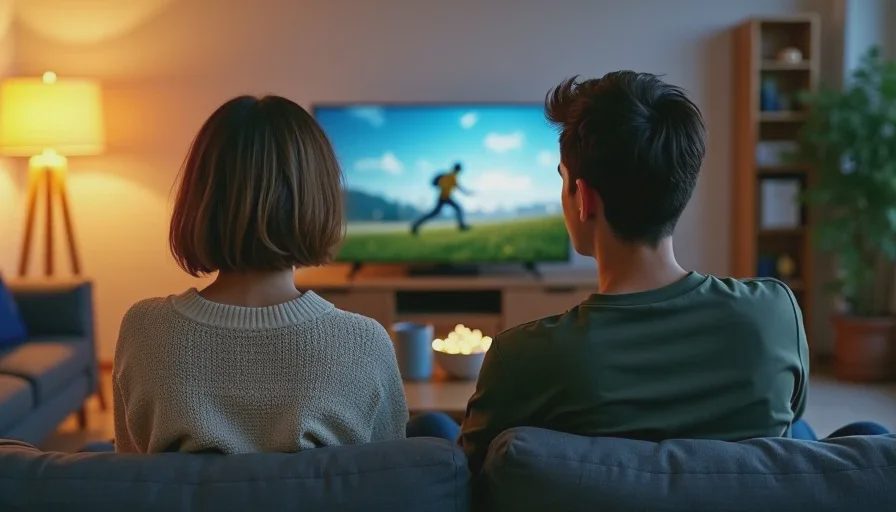
Couch co-op is often sold as easy shared fun. In practice many titles spend the first half of a limited evening on rules, menus, and system explanations. The practical filter for busy adults is narrower: which games let two people start playing—and enjoying—it inside the first ten minutes?
I have watched too many promising co-op nights stall while someone read tooltips or explained systems. The games that actually work share a structural trait: the core interaction is obvious, the shared fantasy is immediate, and the rules overhead is minimal. Low friction, high payoff applies to the social session as much as to the solo one.
This piece focuses on the traits that make couch co-op viable for residual-energy evenings, offers concrete structural examples, and provides a matching approach for different group moods and energy levels. The aim is nights that feel shared rather than instructional.
What Low-Explanation Co-op Actually Requires
A game can be deep and still be quick to start. The distinction is whether the depth is revealed through play or required as prerequisite knowledge. For busy adults the second model is usually fatal to the evening.
Traits That Support Fast Shared Starts
Core verb is obvious within the first minute
Shared screen or very simple drop-in
Failure is readable and low-blame
Minimal menu or character-setup friction
Tone that supports conversation rather than demanding silence
Feedback that both players can parse without pausing to explain
When these traits are present, the evening can move from “shall we play?” to actual play without a long runway. When they are absent, the social energy often drains before the fun arrives.

Structural Patterns That Work
Several design patterns consistently keep explanation time low while still delivering a real shared experience.
Immediate Shared Action
Games where both players are moving and acting within seconds of the title screen tend to clear the filter. The fantasy is felt rather than taught. Conversation can begin immediately because both people are already inside the activity.
Asymmetric but Simple Roles
Some titles give players different abilities that are easy to grasp in under a minute. The asymmetry creates natural conversation and interdependence without requiring a lecture. Each person can learn their role by doing rather than by listening.
Readable Chaos
Party-style or light competitive games with clear, instant feedback loops often work when the group wants energy rather than narrative. The rules are learned by succeeding or failing once, not by reading. Blame stays low because the chaos is the point.
Gentle Cooperative Systems
Light building, arranging, or survival games that let players contribute without strict sequencing can support lower-energy shared nights. The key is that contribution is visible and optional rather than mandatory and complex. One person can take a larger role without the other feeling useless.
Matching by Group Energy and Mood
Group Energy / Mood | Stronger Pattern | Why It Tends to Work |
|---|---|---|
Low residual, want gentle | Gentle cooperative systems | Contribution without pressure or blame |
Moderate, want shared action | Immediate shared action | Agency for both players within seconds |
Want light competition | Readable chaos | Instant feedback, low blame, high energy |
Want light roles | Asymmetric but simple | Conversation starter without rules dump |
The table is a starting filter. The specific people on the couch and the shape of the evening will refine the choice further. Worth opening tonight is still the only ranking that matters for the shared session.

Common Co-op Friction Points
Several patterns repeatedly turn promising nights into instruction sessions:
Character or loadout screens that require sequential decisions
Tutorials that cannot be skipped or accelerated
Systems that punish the more experienced player for the less experienced one’s mistakes in a high-blame way
Shared-screen designs that become unreadable when both players are active
Long setup sequences that consume the residual social energy before play begins
If a game repeatedly turns the first twenty minutes into explanation or frustration, it is allowed to wait for a higher-capacity night or a different group. This is a two-hour energy game test applied to the social setting. Good game, wrong night applies here as it does to solo play.
A Simple Process for Choosing Co-op Tonight
When two people have a limited window and want to share it, walk through these questions together:
How much residual energy does each person actually have?
Do we want gentle cooperation, shared action, light competition, or simple roles?
Which available titles put both players into the fantasy inside the first few minutes?
Can we imagine stopping after thirty to sixty minutes and still feeling that the time was shared and worthwhile?
If the answers point clearly toward one title, start it. If they do not, choose the lowest-friction option that still interests both people and treat the session as a complete experiment. Many good co-op nights begin with a short, low-pressure test rather than a perfect plan.
Closing the Loop
Couch co-op that works for busy adults treats the shared start as valid. It puts both players into the fantasy quickly, keeps rules overhead minimal, and lets conversation and play coexist. The patterns above illustrate different ways that structure can look in practice.
Match the pattern to the energy and mood of the people actually on the couch. Keep the friction low. Protect the payoff of the evening itself. That approach turns limited free time into nights that still feel shared and worthwhile. Low friction, high payoff is still the most practical filter for co-op as well as solo play.
No comments yet — grab the first one.