
When the day has already used most of your focus and you still want to play something good, the usual recommendation lists often fail. They point toward ambitious titles that assume peak energy. What actually works is a different filter: games that meet you at the energy level you have left and still deliver a satisfying unit of play.
I have closed more highly rated games out of simple exhaustion than I care to admit. The ones that stay open are the ones that do not punish low focus. They start quickly, offer clear short-term goals, and let you stop without the sense that you have failed a larger structure. Low friction, high payoff remains the practical standard.
This piece collects the kinds of games and specific traits that tend to work when you are tired but not ready to give the evening to passive media. It is not a ranked list of universal winners. It is a set of patterns, decision tools, and concrete examples that have repeatedly cleared the tired-evening test for busy adults.
What Tired Play Actually Requires
Tired play is not the same as casual play. Casual can still tolerate some complexity. Tired play needs lower cognitive overhead, reliable short loops, and a reduced cost for stopping. The difference shows up in the first ten minutes. If the game asks you to re-learn systems, absorb dense text, or commit to a long unskippable sequence, the session often ends before it begins.
Core Traits That Help
Immediate agency rather than long setup
Visible progress inside 20–40 minutes
Forgiving or absent fail states that do not demand relearning
Save systems that trust the player
Tone that can be restorative or at least non-draining
Minimal menu friction and clean pause points
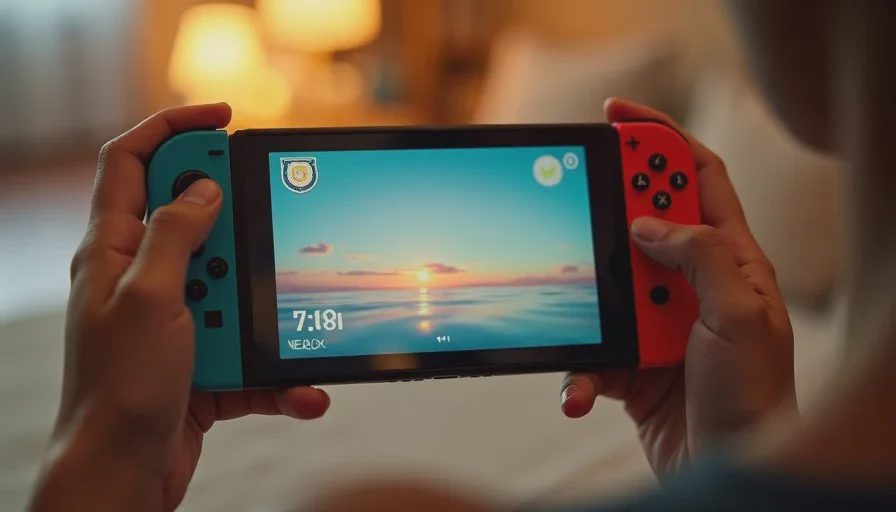
When these traits are present, the session usually feels like a net positive. When they are absent, even a strong game can leave you more drained than when you started. Good game, wrong night is a real and useful category here.
Categories That Tend to Work
Certain structures map more cleanly onto low-energy evenings. Matching the structure to residual energy is more reliable than chasing reputation or novelty.
Light Management and Cozy Loops
Games that let you make small, visible improvements without high-stakes decisions often restore rather than deplete. Planting, arranging, light crafting, or simple resource loops give a sense of gentle agency. The pleasure comes from the act itself rather than from overcoming a major obstacle. These are useful when the brain wants to do something without being asked to solve anything hard.
Short Narrative Chapters
Story games with clean chapter breaks and modest mechanical demands can deliver a complete emotional unit without requiring peak concentration. The writing and pacing do the heavy lifting. The key is whether the chapter feels finished when you stop. Titles that leave you mid-conversation or mid-revelation tend to create more friction than satisfaction on a tired night.
Forgiving Run-Based Titles
Some run-based games keep the decision space readable and the run length short enough that one or two cycles still feel complete. The important variable is how failure is handled. If death or reset feels punishing when focus is already limited, the game will drain rather than restore. The better fits treat each run as a self-contained experiment rather than a high-stakes attempt.
Purely Sensory or Atmospheric Experiences
Titles that prioritize mood, music, and gentle interaction over challenge can fit when the brain wants input without heavy processing. These are not “do nothing” games. They still provide agency. They simply keep the cognitive cost low enough that residual energy is enough.
Practical Matching Table
Use the following as a quick reference when the evening is already running on residual energy.
Energy Residue | Stronger Category | Session Shape | What Success Feels Like |
|---|---|---|---|
Very low | Cozy management / atmospheric | 20–40 min open loop | Gentle progress, low decisions |
Low-moderate | Short narrative chapters | One chapter or equivalent | Complete story beat, clean stop |
Moderate but tired | Forgiving run-based | One or two short runs | Clear start and finish, readable choices |
Want shared low-key | Simple local co-op | Immediate joint play | Conversation + light mechanics |
Prefer pure mood | Atmospheric / sensory | Flexible length | Immersion without pressure |
The table is a starting filter. Personal taste and the specific games in your library will refine it further. The goal is not to find the single right title. The goal is to reduce the cost of the decision itself.
Common Mistakes When Choosing Tired-Evening Games
A few recurring patterns tend to waste the limited window:
Picking a title because you feel you “should” play it
Ignoring how the game handles mid-session stops
Choosing something that requires a fresh mental model
Underestimating how much residual focus the day has already consumed
Treating the session as a test of whether you will eventually finish the whole game
If a game keeps failing the first twenty minutes on tired nights, it is allowed to wait for a higher-energy window. Worth opening tonight is a stricter and more useful standard than reputation or sunk cost. This is a two-hour energy game test, not a weekend ownership test.
Another subtle trap is over-correcting toward pure comfort. Sometimes a slightly sharper experience is more restorative than a completely frictionless one, because it still provides a sense of agency. The matching table above is meant to help calibrate that balance rather than push every evening toward the softest possible option.
A Simple Decision Process for Tonight
When the free time appears and the brain feels thin, walk through these questions in order:
How much actual focused energy do I have right now—very low, low-moderate, or moderate but tired?
Do I want something restorative, something lightly sharp, or something shared?
Which games in my library (or easily available) match that energy and desire with low start-up friction?
Can I imagine finishing a satisfying unit of play inside the time I have?
If the answers point clearly toward one title, open it. If they do not, choose the lowest-friction option that still interests you and give it twenty to thirty minutes. Many good tired evenings start with a short, low-pressure test rather than a perfect plan.
Closing the Loop
The games that work when you are tired but still want to play something good share a common respect for residual energy. They do not assume you arrive at the session at full capacity. They give you agency quickly, return a sense of progress inside a short window, and let you stop without penalty.
Match the structure to the night you are actually having. Keep the friction low. Protect the payoff. That approach turns limited free time into evenings that still feel like they belong to you. Low friction, high payoff is still the most reliable filter for tired play.
No comments yet — grab the first one.