Most adults do not need another massive open-world checklist. They need 4 hour games that create momentum quickly, offer a clear stopping point, and leave them glad they played. If you have one free evening after work, the right short game can deliver more satisfaction than a prestige release that asks for 60 hours before it becomes interesting.
This is the useful distinction: short does not automatically mean slight. A well-paced game can introduce its idea, develop it, and finish before your attention gets pulled toward tomorrow's errands. The recommendations below focus on games that respect limited time, whether you want a story, a strange puzzle, a calm walk, or a compact action campaign.
What makes 4 hour games worth your evening?
The best 4 hour games have low friction. You can install or launch them, understand the basic rhythm within minutes, and make meaningful progress without studying a wiki. They also provide natural breaks. A chapter ends, a mystery develops, or a difficult section gives way to a new scene. You can stop at midnight without feeling that you abandoned the entire experience.
That matters more than raw playtime. A four-hour game padded with repeated tasks is still a bad use of an evening, while a two-hour game with strong pacing can feel complete. Look for a focused premise, reliable checkpoints, and a scope that matches the runtime. If a game advertises a huge map, dozens of upgrade trees, and endless collectibles, it is probably a good game for another night.
One important note: completion times are estimates, not guarantees. Exploration, difficulty, and optional content can shift a game by an hour or two. Treat the runtime as a planning tool rather than a promise.
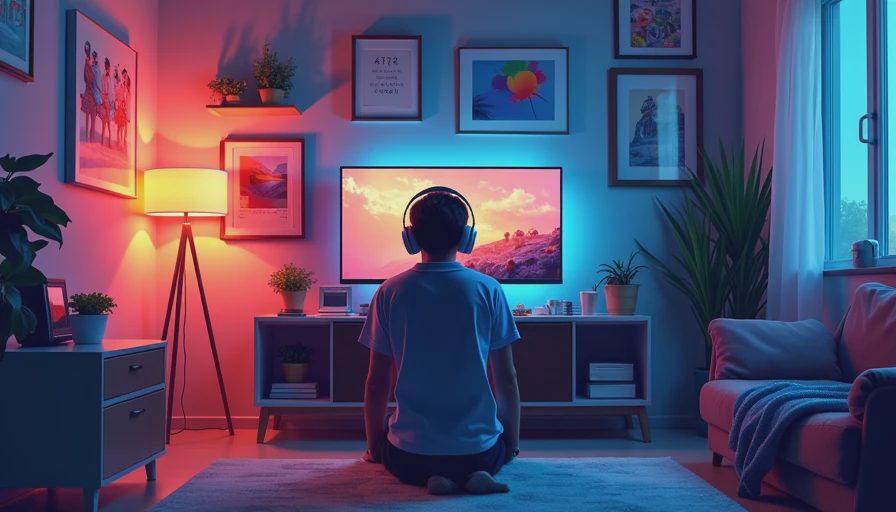
Story-first picks for one sitting
Firewatch remains an easy recommendation when you want atmosphere without homework. Its walking, conversation, and mystery structure make it simple to start after dinner. The game is usually finished in roughly four to five hours, and its isolated Wyoming setting gives the evening a distinct mood. It is a good choice when you want dialogue and tension rather than combat. Good game, wrong night if you are looking for a cheerful power fantasy.
To the Moon is another strong fit for a quiet evening. It is built around a straightforward story, light interaction, and an emotional payoff rather than difficult mechanics. Expect around four to five hours for a first playthrough. Its pixel presentation is modest, but the writing carries the experience. This is one of the 4 hour games best suited to players who want something memorable without learning a complicated system.
The Stanley Parable: Ultra Deluxe works when you want comedy, experimentation, and a game that knows you are playing a game. You can see a meaningful slice in an evening, although its many paths invite returning later. It is less about beating a campaign and more about discovering how much the design reacts to your choices. Start it when you want something playful and unpredictable.
Quiet games with low commitment
Some nights call for less intensity. A Short Hike is a compact exploration game that can be completed quickly, but it does not rush you. You climb, glide, fish, talk with characters, and collect small moments at your own pace. It is closer to a relaxed afternoon than a four-hour epic, which makes it useful when your energy is low and you still want to play something.
The Artful Escape offers colorful visuals, music-driven movement, and a simple story about identity and performance. It generally fits a single evening or two shorter sessions. The platforming is forgiving, so the focus stays on presentation and momentum. It is a particularly good pick after a long workday because failure rarely turns into a frustrating wall.
Venba is even shorter, but its cooking mechanics give the story a tactile center. Recipes, family conversations, and small interactive tasks work together without demanding mastery. You can finish it in a few hours and still have time to think about it afterward. Not every worthwhile game needs to fill the entire night; sometimes a precise, complete experience is exactly what the backlog needs.
Compact action and puzzle choices
If you need more energy, Minit turns repetition into its central idea. Each run lasts only a minute, and progress comes from learning the map, finding items, and remembering what changes the next attempt. It is clever rather than exhausting, and its compact structure makes it easy to play in short bursts. You can open it for 20 minutes or stay longer without losing your place.
Inside is a darker option with almost no verbal explanation. Its puzzles are direct, its animation is striking, and its oppressive atmosphere keeps the short campaign moving. Most players can complete it in a few hours, though some puzzles may extend the session. It is one of the 4 hour games to choose when you want strong visual direction and a story that trusts you to interpret what you see.
Journey is a calm, mostly wordless adventure that can fit into one sitting. Movement is simple, the environments are beautiful, and the experience is designed around discovery rather than inventory management. It is ideal when you want a game with emotional shape but no complicated onboarding. Put it on when you have limited time and do not want another screen full of quests.

How to choose based on your mood
Choose Firewatch or To the Moon when you want dialogue and a plot that keeps moving. Choose Inside when you want tension, visual storytelling, and puzzles. Choose A Short Hike or Journey when you want a softer landing after a demanding day. Choose Minit when you want to solve problems actively but only have small pockets of time.
For a social evening, The Stanley Parable can create conversation because different players may encounter different routes and jokes. For a solo, reflective night, Venba has a warmer and more personal rhythm. These are not interchangeable recommendations, and that is the point. The best short game depends on your available energy as much as your available hours.
Before launching, make the decision practical. Check whether the game is already installed, confirm that your controller works, and choose a stopping point before you begin. A 4 hour games session should feel like a complete plan, not another open-ended obligation. Turn off unnecessary notifications, play with headphones if the sound design matters, and give the opening 30 minutes your full attention.
A simple backlog test
Ask three questions: Can I understand the core loop tonight? Does the game save or checkpoint cleanly? Will finishing a chapter feel satisfying even if I never return? If the answer is yes, move it ahead of the giant unfinished RPG currently occupying your library.
That is why 4 hour games deserve a permanent place in a backlog. They create an achievable promise: start tonight, make real progress, and possibly reach the ending before the week gets busy again. You do not need to force yourself through a 100-hour release to count the evening as good gaming. Pick the mood, start the smallest promising download, and find out whether it is worth opening tonight.
No comments yet — grab the first one.