
The first hour of a game is often the most honest test for busy adults. It reveals whether the experience respects limited time or assumes unlimited patience. The practical question is not which games eventually become great. It is which ones deliver a clear, rewarding unit of play inside the first sixty minutes.
I have abandoned more titles in the first hour than I have finished. The ones that survive that window share a common pattern: they give agency early, establish tone or systems without long lectures, and leave the player with a sense of progress or enjoyment before the session ends. Low friction, high payoff is visible almost immediately.
This piece focuses on the structural traits that produce a strong first hour, offers concrete examples across different moods, and provides a decision framework for matching those first hours to residual energy. The goal is not to crown universal winners. The goal is to give busy adults a reliable way to choose openings that match the evenings they actually have.
Why the First Hour Matters More Than the Full Runtime
Many games are designed around a long arc. The early hours are treated as investment. For players with limited free time, that investment model often fails. A strong first hour does not guarantee a great full game, but a weak first hour almost guarantees the game will not be opened again on a normal weeknight.
The cost of a weak first hour is higher than most review scores acknowledge. It consumes the limited residual energy of the evening and often leaves a lingering sense that the next free window should be spent on something safer. Over time that pattern trains players to avoid ambitious titles even when those titles might eventually fit. A better filter starts at the sixty-minute mark.
Traits of a Strong First Hour
Agency within the first ten to fifteen minutes
Tone or fantasy established without dense text
At least one complete, satisfying unit of play (a fight, a room, a short cycle, a conversation beat)
Clear indication of what the next session will feel like
Low cost for stopping at the sixty-minute mark
When these traits are present, the first hour feels like a complete experience rather than a down payment. That difference determines whether the game earns a second session.
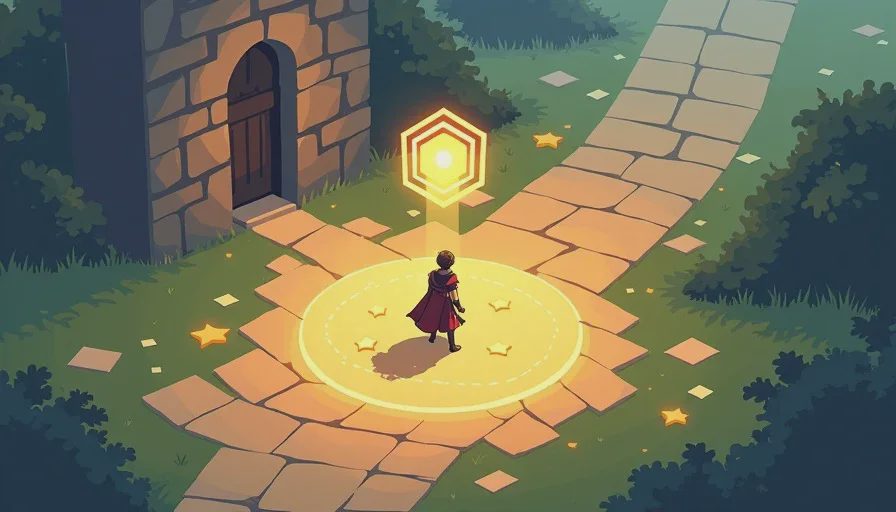
Examples of Strong First-Hour Structures
The following patterns consistently produce usable first hours for residual-energy players. They cut across genre and budget. What they share is structural respect for the opening window.
Immediate Systemic Fantasy
Games that put the core verb in the player’s hands almost immediately—move and fight, place and build, choose and resolve—tend to clear the first-hour test. The fantasy is felt rather than explained. Feedback arrives early and the player can already see the shape of longer play without being forced into it.
Contained Narrative Openings
Some story-driven titles front-load character, place, and tone so that the first hour already functions as a short, self-contained chapter. The practical requirement is that the hour ends on a natural breath rather than a cliff that demands continuation. When that structure is present, the session feels finished even if the larger story continues.
Readable Challenge Units
Precision platformers or tactical games with generous early checkpoints can deliver multiple complete challenge units inside sixty minutes. Mastery feedback arrives early and stopping feels clean. The player leaves with a sense of having completed something rather than having been interrupted.
Low-Stakes Ownership Loops
Light management or cozy games that allow visible ownership or arrangement in the first hour often feel restorative. Progress is tangible and the emotional cost of stopping is near zero. These openings are especially useful when residual energy is low but the desire to play remains.
Matching First Hours to Residual Energy
Not every strong first hour fits every night. Residual focus and desired tone still matter. The table below is a practical starting filter.
Residual Energy | Stronger First-Hour Shape | What the Hour Should Deliver |
|---|---|---|
Very limited | Low-stakes ownership or atmospheric | Gentle progress, almost no new systems |
Low-moderate | Immediate systemic fantasy | Clear agency and visible power or growth |
Want story | Contained narrative opening | Character + place + one complete beat |
Want sharp focus | Readable challenge units | Multiple finished challenges + mastery feel |
The table is orientation, not prescription. The goal is to choose a first hour that matches the capacity you actually have tonight. Worth opening tonight remains the only ranking that matters.
Common First-Hour Failures
Several patterns repeatedly waste the opening window:
Long unskippable or dense tutorial sequences
Systems that require holding a large mental model before any fun appears
Early hours that feel like preparation for a better game that never quite arrives
Stopping points that feel like interruption rather than completion
Tone that demands more emotional or cognitive weight than residual energy can support
If a game’s first hour consistently fails these tests for you, it is allowed to wait for a higher-capacity window or to leave the active library. This is a two-hour energy game test applied to the opening window. Good game, wrong night is still a useful category.
Another subtle failure mode is the “almost” first hour—sessions that feel promising but never quite deliver a finished unit. These are often more draining than clear failures because they leave the player uncertain whether to continue. A strong first hour removes that uncertainty.
A Simple Process for Evaluating the First Hour Tonight
When you are deciding what to start, walk through these questions before the download or the boot:
How much actual focused energy do I have right now?
Do I want restoration, light agency, story texture, or sharp focus?
Which available titles are known (or reputed) to put the core fantasy in the player’s hands quickly?
Can I imagine stopping at sixty minutes and still feeling that the time was well spent?
If the answers point clearly toward one title, start it. If they do not, choose the lowest-friction option that still interests you and treat the first hour as the entire experiment. Many good nights begin with a bounded test rather than an open-ended commitment.
Closing the Loop
Games with strong first hours treat the opening session as valid. They give agency early, establish the fantasy without lengthy lectures, and leave the player with a finished feeling at the sixty-minute mark. That structure is the most reliable predictor of whether a busy adult will return.
Match the first-hour shape to the energy you actually have. Keep the friction low. Protect the payoff. That approach turns limited free time into nights that still feel like play rather than obligation. Low friction, high payoff is still the most practical filter for the first hour and for every hour that follows.
No comments yet — grab the first one.